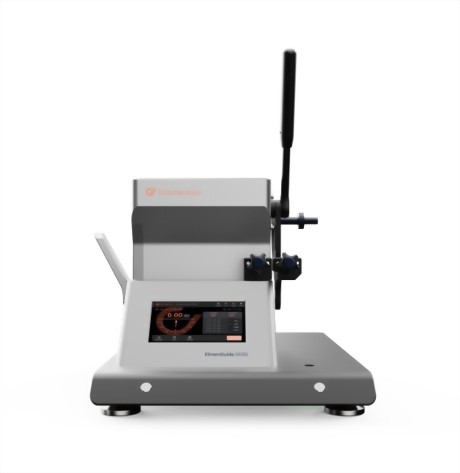
The ElmenGuide Elmendorf tearing strength tester, also known as the Pendulum Tearing Tester, do the bursting test by using a pendulum tearing method. The pendulum falls from a certain starting height, converts all potential energy into kinetic energy, cuts a slit on the fabric, and then measures the force required for the fabric to tear to a specified length, which can be used to calculate the fabric’s tear resistance.
It is mainly suitable for woven fabrics, but also for other textiles produced by other technologies, such as non-woven fabrics. However, it is not suitable for knitted fabrics, woven elastic fabrics, and fabrics in which the tearing direction will change during tear testing.
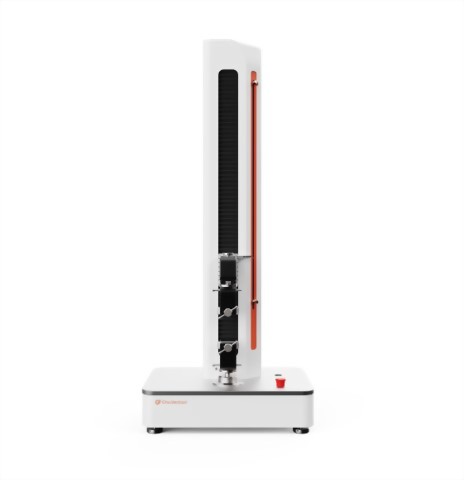
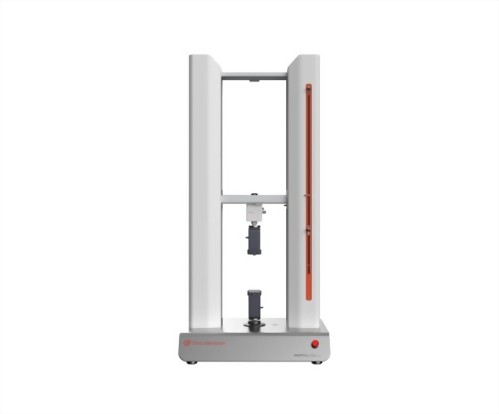
SmartPull Textile Tensile Tester is AC servo-driven and equipped with ball screws to provide stable pulling force and achieve higher testing accuracy. The software of the tensile tester machine is compatible and powerful by outputting comprehensive test indexes, such as displacement, maximum force, elongation, stress, etc.; and there are various safety designs to protect the instrument and the operator’s safety. It is a tensile machine specially built for textiles, leather, footwear, etc. It can do tension, compression, bending, tearing, shearing, peeling, and top-breaking tests. It is applicable to many international standards, such as ISO3377, ISO 13935, ISO 13937, ISO 20932-1, ISO 4674, ASTM 5034, ASTM D4964, GB/T 3917.5, FZ/T 01030, and so on. Click here to get SmartPull Textile tensile tester price.
The SmartPull Tensile Strength Tester is used to test the tension, compression, bending, bursting, shearing, and peeling of materials (fabric, leather, plastic, paper, etc.). The equipment can be controlled by computer, and collect accurate data, analyze data, and output test results, and reports.
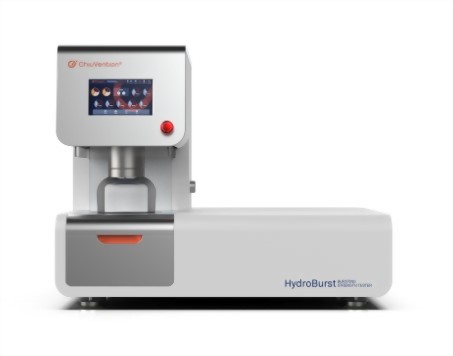
The HydroBurst Automatic Bursting Strength Tester utilizes hydraulic bursting (diaphragm method) to determine the bursting strength and expansion of knitted fabric, woven fabric, non-woven fabric, laminated fabric, elastic woven fabric, paper, and other materials when subjected to stress in both warp and weft directions, as well as in all other directions, to get the material’s resistance to bursting.
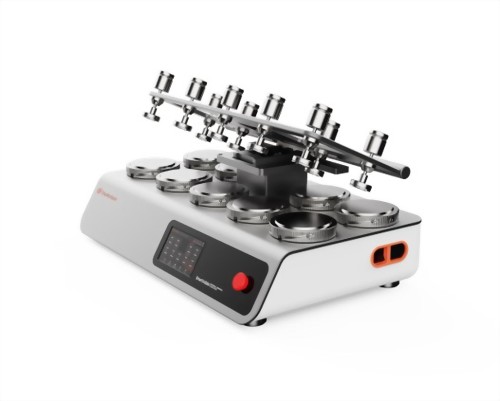
The Smartindale Martindale Abrasion & Pilling Tester replaces the traditional analog drive with a digital drive, which makes the textile abrasion pilling test more accurate. It is a smart instrument, which can be networked with the SmarTexLab app installed in the smartphone through the IoT technology, thus realizing the setup of parameters on the phone, monitoring the test status, and sharing the test results with one key. It improves the efficiency of the operators.
In addition, Smartindale has the advantages of one-touch switching of test modes, calibration-free, stable and safe operation. It is applicable to a wide range of international standards, such as ISO 12945-2-2020, ISO 12947-2-2016, BS EN 530-2010, ASTM D4970/4970M-22, etc., and can test the abrasion resistance and pilling performance of cotton, linen, silk woven fabrics and other textiles, film materials, knitted fabrics, woolen fabrics, artificial leather, synthetic leather, gloves, labor protection materials, etc.
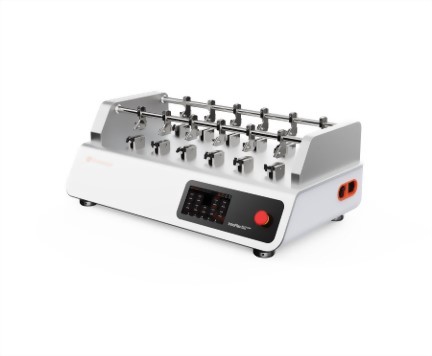
InnoFlex Bally Flexing Tester is equipped with advanced servo motors for precise positioning, and a stable testing process, achieving more accurate and reliable test results. It is a smart instrument that can be connected to the SmarTexLab app installed in your smartphone via WIFI, which allows you to remotely set the parameters and monitor the testing process, greatly improving work efficiency. With a noise level of only 60 dB, it is user-friendly and durable. Suitable for a wide range of testing standards, such as ISO 5402-1:2017, ISO 32100:2018, ISO 20344-2011, and SATRA TM55.
InnoFlex Bally Flexing Tester also known as InnoFlex Leather Folding Endurance Tester, is used to test the flexing resistance of leather, cloth, and other materials. Take one side of the sample as the inner side, and the other side as the outer side, then InnoFlex will bend the sample back and forth until the damage occurs, or bend a certain number of times to see the degree of damage, to determine the sample flexing strength.